
 Salomon LundquistUpdated Articles
Why floating ports will shape tomorrow's maritime infrastructure
From rising trade volumes to stricter environmental requirements, the maritime industry faces unprecedented challenges. This report explores why modular floating ports could play a pivotal role in the future of global logistics.
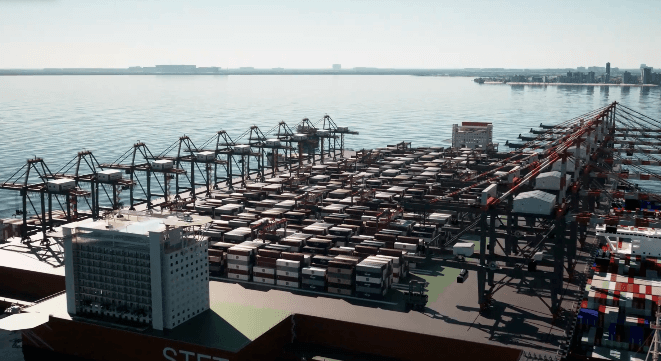
More than 80% of global trade by volume is transported by sea, making maritime transport the backbone of the global economy. Every day, thousands of vessels carry the goods, raw materials and energy resources that keep industries and societies running. As global trade continues to grow, ports face increasing pressure from larger vessels, rising cargo volumes, limited space for expansion and stricter environmental regulations. Recent disruptions in key shipping routes, including the Suez and Panama Canals, have further highlighted the need for more resilient, flexible and sustainable port infrastructure.
Despite these challenges, shipping remains the most carbon-efficient mode of freight transport per tonne-kilometre. Ongoing investments in cleaner fuels, digital technologies and stricter international regulations are further reducing the industry's environmental impact. Traditional port expansion often involves extensive dredging, land reclamation and lengthy permitting processes. Floating port infrastructure offers a complementary alternative by providing scalable capacity with reduced environmental impact and greater operational flexibility.
However, sustainable shipping also requires smarter infrastructure.
At Sea Technology, we believe the future of maritime infrastructure should be modular, sustainable and adaptable. Our floating terminal concept is designed to complement existing ports by increasing capacity without the need for extensive coastal development. The modular design allows terminals to expand as demand grows while supporting more resilient and efficient supply chains.
As international trade continues to evolve, the ports of tomorrow must become smarter, more flexible and environmentally responsible. Growing cargo volumes, changing trade patterns and stricter environmental standards demand new approaches to port development. Floating infrastructure has the potential to complement existing ports by increasing capacity, improving supply chain resilience and supporting a more sustainable future for maritime transport.
Salomon Lundquist
Business Development Manager
Salomon drives Sea Technology's business development, opening conversations with ports, shipowners, and energy operators, and turning the firm's engineering work into long-term partnerships. He advises on commercial strategy across the STFT, floating nuclear, and barge carrier programmes.