
IMPACT
Adding port capacity without costing the coastline
Seventy-five per cent less CO₂ over ten years. No dredging. No land reclamation. Climate break-even in under a year.
How the STFT lowers shipping emissions
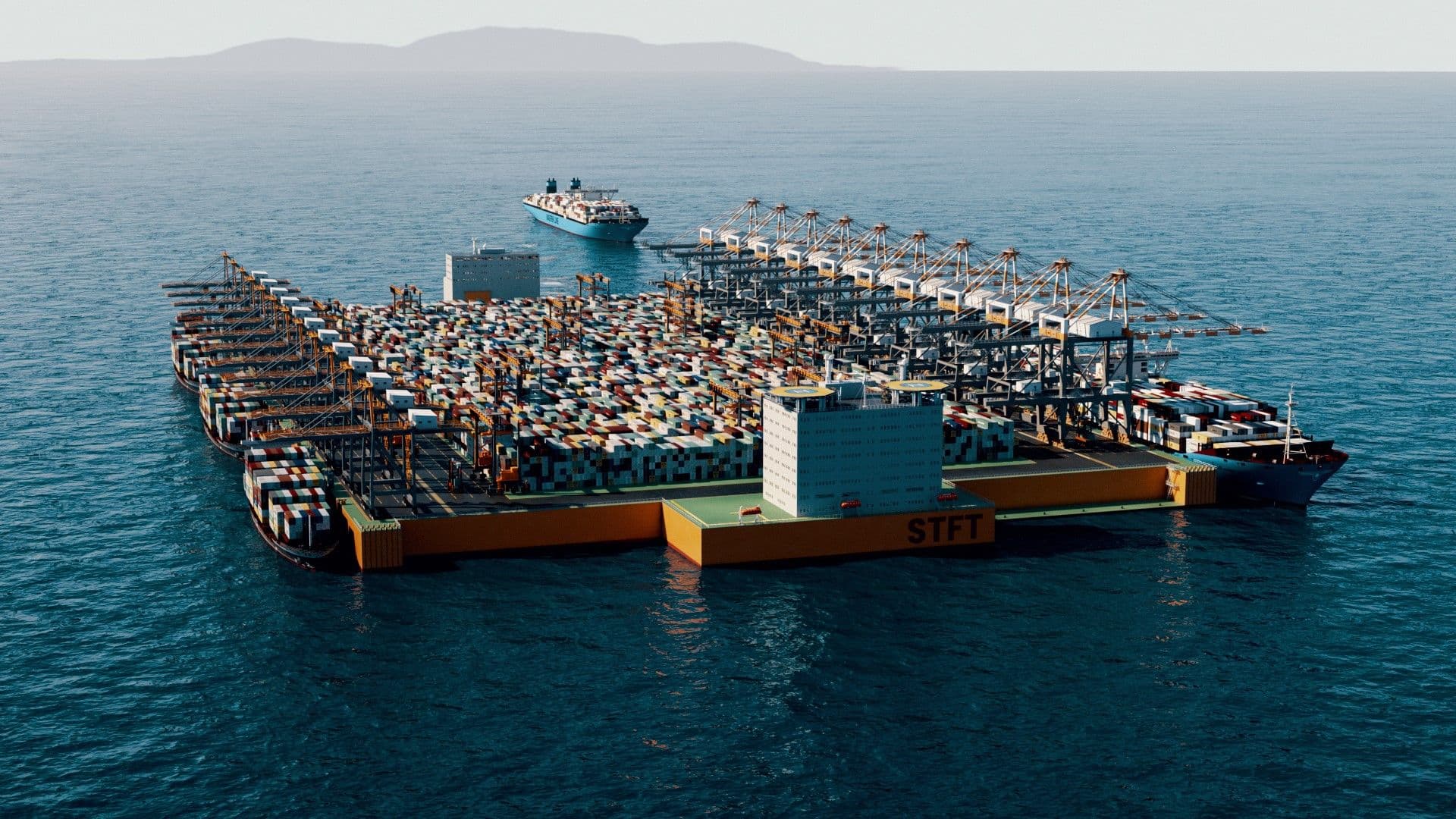
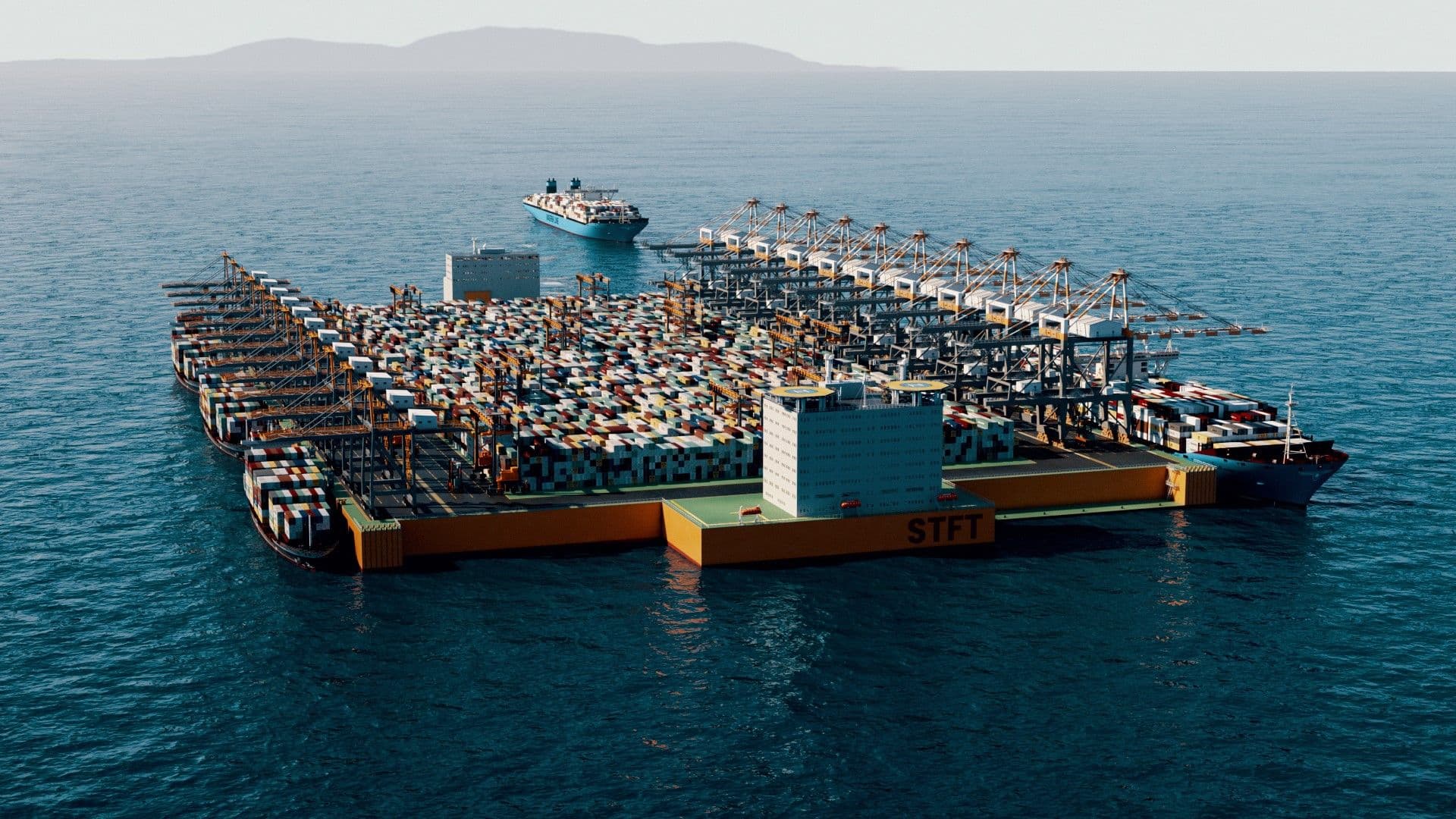
STFT supports the energy transition by making global shipping more efficient and sustainable. By reducing port congestion and vessel waiting times, ships consume less fuel and emit fewer greenhouse gases. Unlike traditional port expansion, STFT adds offshore capacity without major land reclamation or dredging, reducing environmental impact. The platform is also designed to integrate future renewable energy systems and green fuels, supporting the transition to low-carbon maritime transport.
That case is modelled, not asserted. Together with 2050, Sea Technology mapped ten years of CO₂ across Nordic and Baltic container flows using the Avoided Emissions framework and GLEC Framework 3.0 emission factors. RISE Research Institutes of Sweden published the work in 2023, funded by Trafikverket. The figures on this page are theirs.
The platform those figures describe is the Sea Tech Floating Terminal. The same hull carries the floating nuclear power plant that can supply it with clean power at sea.
THE COST TODAY
Ports are where shipping's emissions concentrate
A container ship idling at anchor burns 80 to 100 tonnes of heavy fuel oil a day. Every tonne burned releases about 3.15 tonnes of CO₂.
Waiting at anchor
Congested ports leave the largest vessels queuing offshore. Idle time is fuel burned for nothing, and the emissions settle on the communities nearest the port.
Dredging the seabed
Deepening a harbour disturbs hazardous sediment buried for decades. RISE notes there is still not enough research to know what that does to water quality and ecosystems.
Reclaiming the shoreline
Conventional expansion takes land and fifteen to twenty years to deliver. EU and Asia-Pacific authorities are already restricting new dredge permits.
MODELLED IMPACT
What the platform changes, in numbers
Road freight moves onto feeder vessels. Twenty-seven million tonnes of CO₂ down to seven over a decade.
Time to offset the platform's own construction emissions.
Rotterdam to Oslo by road, against a feeder from the terminal.
FOUR LEVERS
Where the reduction actually comes from
Four levers, all of them engineering rather than offsetting.
Offshore capacity takes the largest vessels out of the queue. A ship that does not wait does not burn fuel at anchor, and the saving repeats on every call.
The platform is anchored, not excavated. Nothing is dug from the seabed and nothing is taken from the shore, in water up to 1,000 metres deep.
Onboard or grid-tied clean energy eliminates diesel-genset emissions at the quayside, so vessels can moor with their engines shut down.
Designed to integrate future renewable energy systems and green fuels, supporting the transition to low-carbon maritime transport.
SIDE BY SIDE
Offshore terminal against conventional expansion
| Measure | Conventional expansion | Floating terminal |
|---|---|---|
| Time to capacity | Fifteen to twenty years | Under five years |
| Seabed | Dredged; sediment plumes for decades | Untouched |
| Shoreline | Land reclamation | None |
| Siting depth | Limited by the dredged channel | Up to 1,000 metres |
| If demand moves | Fixed for the life of the asset | Can be relocated |
| Asset life | Tied to the civil works | Sixty years, per DNV AiP |
VALIDATED BY
Independently reviewed, publicly funded



Frequently asked
What port authorities, regulators and investors ask about the environmental case.
A floating terminal is anchored, not excavated. No seabed is dredged and no shoreline is reclaimed. Dredging disturbs hazardous sediment that has been buried for decades, and RISE notes the effect on water quality and ecosystems is still not well understood. Siting the terminal offshore also moves ship emissions away from the people and habitats nearest the port.
Scenario modelling by Sea Technology and 2050, published by RISE in 2023, puts it at 75 per cent over ten years — twenty-seven million tonnes of CO₂ down to seven million, including the 1.5 million tonnes from building the platform. Transport emissions alone fall by about 80 per cent.
The Avoided Emissions framework, using GLEC Framework 3.0 emission factors. The model compares a baseline in which cargo arrives at Rotterdam and is distributed to the top ten Nordic and Baltic ports by a mix of modes, against a scenario in which a Sea Tech platform shifts part of that distribution from road to feeder vessel. The full method, assumptions and figures are in the RISE report.
No. Construction is counted in the model, at roughly 1.5 million tonnes of CO₂, and the platform reaches climate break-even in under a year of operation.
It is designed to. Power at the quay is onboard or grid-tied clean energy, which removes diesel-genset emissions, and the platform is engineered to integrate future renewable energy systems and green fuels as they become available at scale.
Those are the rules the model was built against. EU-ETS and FuelEU Maritime put a price on maritime emissions, and the IMO's Carbon Intensity Indicator rates vessels on how efficiently they move cargo. Cutting waiting time and shortening the road leg improves both. We do not certify compliance — we remove the emissions at source.
NEXT STEP
Let's put numbers on your port
We work with port authorities, terminal operators and government delegations on capacity and emissions planning.
Typical first conversation: thirty minutes.