
GLOBAL OPPORTUNITIES · PANAMA
Transshipment capacity at both ends of the Panama Canal
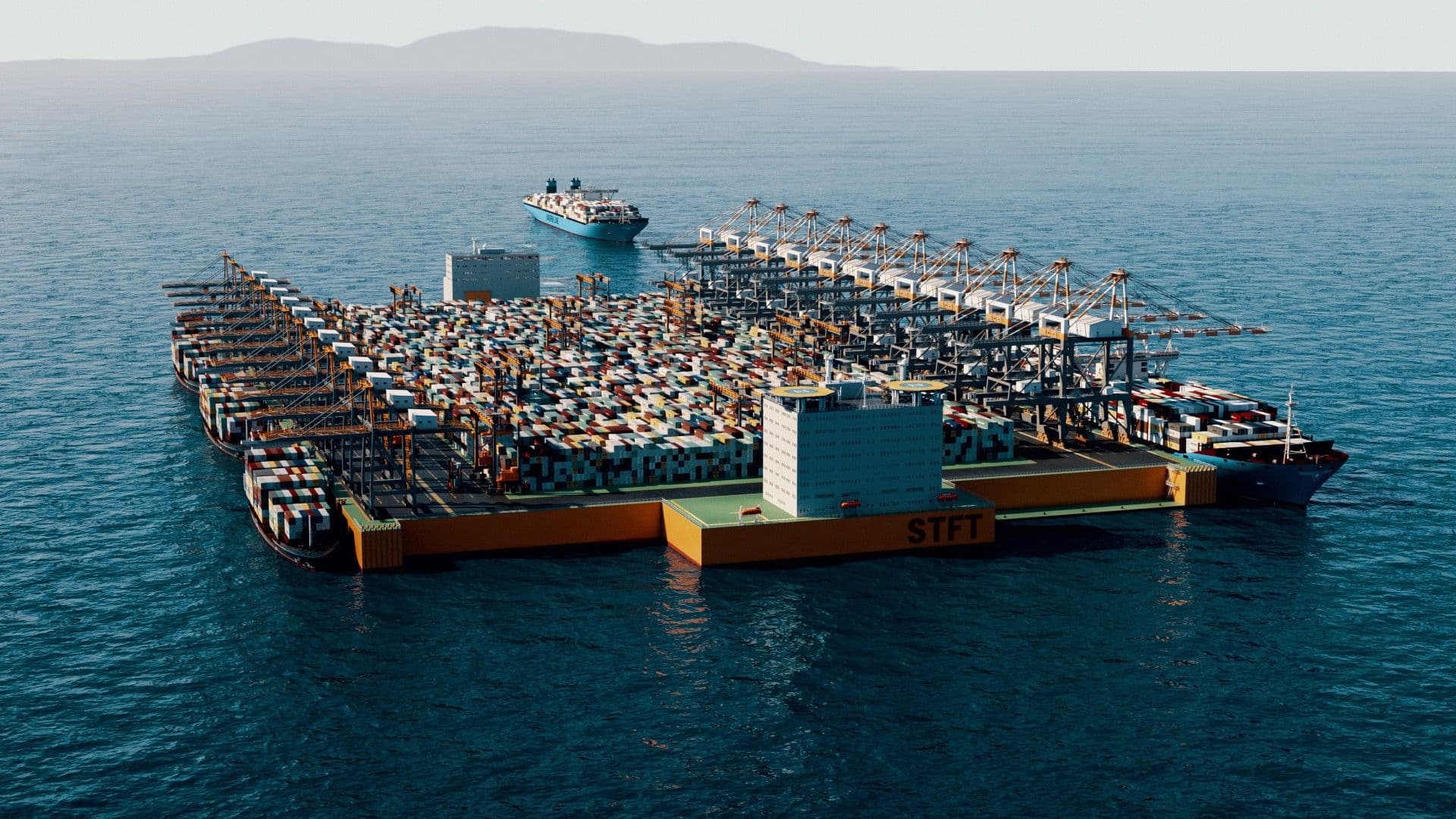
The largest container ships cannot fit through the canal's locks. Their cargo has to change ships on one side or the other, and a floating terminal could add that capacity where it is needed.
Status: Active Dialogue & Opportunity Development.
The largest ships cannot use the canal
The Neopanamax locks take ships of up to 370.33 metres long, 51.25 metres wide and 15.24 metres of draft (Panama Canal Authority, June 2021; May 2018). The largest container ship to transit so far is MSC Marie, at 17,640 TEU (Panama Canal Authority, August 2024).
Today's largest ships do not fit. MSC Irina, at 24,346 TEU, is 399.99 metres long and 61.3 metres wide (Maritime Executive, March 2023). Cargo on ships of that size has to be transshipped onto smaller vessels to cross between the Atlantic and the Pacific.
Panama's container ports already do this work: they handled 9.9 million TEU in 2025, up 3.6 per cent (Container News, January 2026), with terminals on both coasts, from Balboa on the Pacific to Manzanillo International in Colón on the Atlantic.
The canal also depends on rain. After the driest October on record, the Panama Canal Authority announced cuts in daily transits from 32 to as few as 18 in late 2023, restoring 32 a day only in May 2024 (Panama Canal Authority, February 2024; April 2024).
THE IDEA
One terminal on each side of the canal
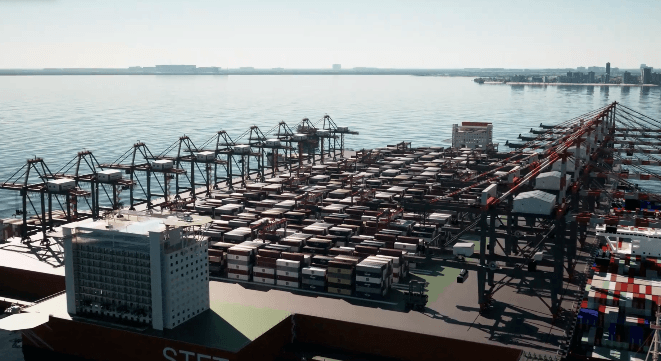
One option a joint concept study would test: floating capacity on the Pacific side, the Atlantic side, or both.
Ultra-large ships from Asia unload at a floating terminal near the Pacific entrance instead of waiting for a quay.
A second terminal serves ships from Europe and the US East Coast, so both oceans gain deepwater berths.
Canal-sized ships and feeders carry the cargo between the two terminals and on to regional ports.
Where our work in Panama stands
Current status: Active Dialogue & Opportunity Development.
As home to the Panama Canal, Panama is central to global container trade. The Sea Tech Floating Terminal (STFT™) could complement existing port operations, providing flexible deep-water capacity and transshipment opportunities without relying solely on land-based infrastructure or extensive dredging and land reclamation. By offering adaptable, resilient berths, floating infrastructure can support canal-related logistics and future maritime expansion.
On August 28, 2026, Sea Technology met with a delegation from the Panama Canal Authority in Stockholm, arranged with the support of Business Sweden. The delegation included Estela Luck, Luis Rovira, Jorge Fernández, Gloria Trejos, Wendy Herrera, and Michelle Núñez. Discussions covered maritime capacity, operational flexibility, resilience, and how floating infrastructure could factor into future procurement frameworks.
In October 2026, Business Sweden hosted a Panama Business Roundtable in Stockholm tied to an official visit from Panama’s Minister of Foreign Affairs, H.E. Javier Martínez-Acha, where Sea Technology was acknowledged among participating companies.
With facilitation and stakeholder introductions supported by Business Sweden, Sea Technology has engaged with Panamanian maritime authorities to evaluate the potential role of floating infrastructure in complementing canal-related logistics.
Next steps include continuing stakeholder discussions and exploring a possible future visit to Panama to assess locations and technical feasibility in more detail.
Panama remains an active market opportunity under evaluation. No formal deployment agreement or approved STFT™ project has been announced.
NEXT STEP
Discuss transshipment capacity at the canal
We work with port authorities, terminal operators and shipping lines on capacity planning.
First conversations are confidential.