
FOR PORT AUTHORITIES AND INFRASTRUCTURE PLANNERS
Add deepwater port capacity without dredging
The largest container ships need more depth than most harbours have. A floating terminal anchors where the depth already is and adds 5 to 6 million TEU a year, operational in under five years.
No dredging, no land reclamation, no ten-year build.

THE CAPACITY PROBLEM
The ships outgrew the harbour
Container ships keep growing. The channels, berths and quay walls built for the last fleet were not.
Not enough depth
Only about 20 to 25 ports can take today’s largest container ships. Every other port has to deepen its channel before it can compete for them.
Dredging never finishes
Capital dredging and new berths take around ten years to deliver. Then maintenance dredging runs for as long as the port wants to keep its depth.
Permits are closing
EU and Asia-Pacific authorities are restricting new dredge permits. Many planned terminal expansions will never break ground.
Go to the depth instead of digging it
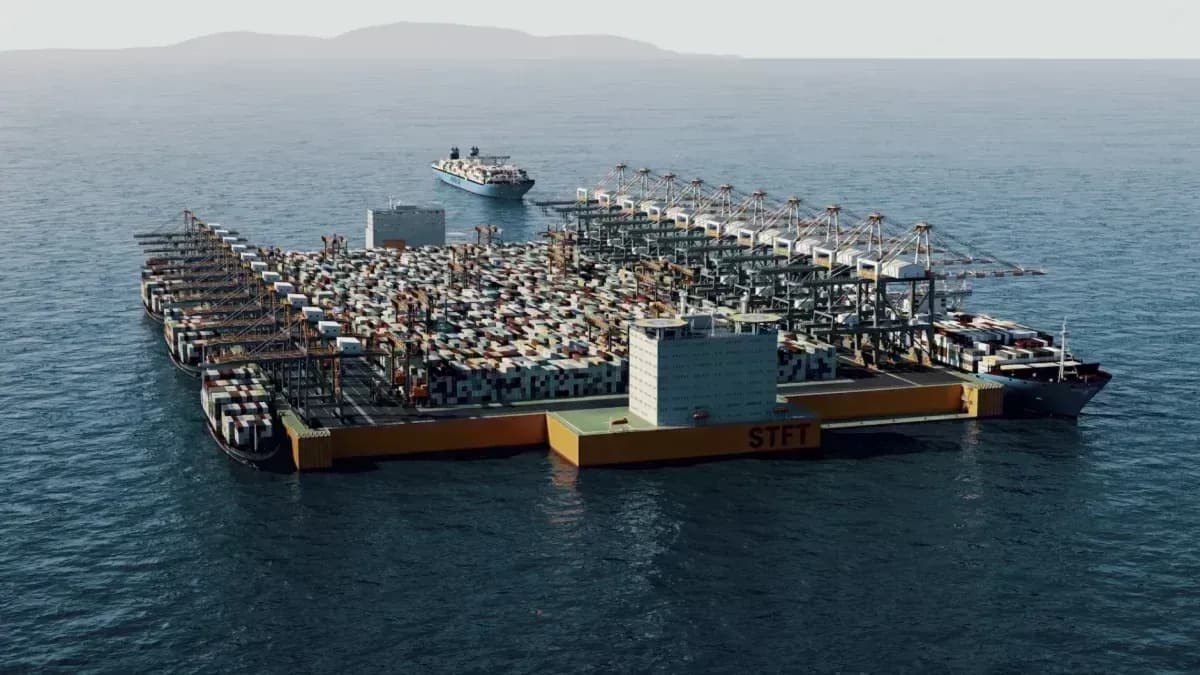
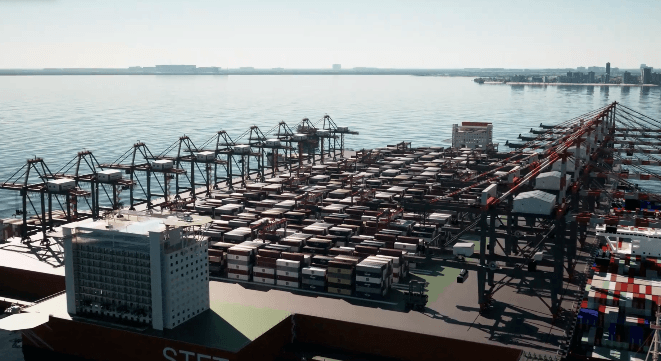
The Sea Tech Floating Terminal is a modular platform that is built in a shipyard, towed to its site and anchored in water up to 1,000 metres deep. Ultra-large container ships berth at its floating quay. Nothing is dug from the seabed and nothing is taken from the shore.
Feeder vessels then carry the cargo on to your existing terminals and regional ports. The floating terminal adds capacity alongside the port you already run, instead of rebuilding it.
WHAT IT CHANGES
Deepwater capacity on a timeline you can plan
Three answers to the three reasons ports cannot expand today.

Depth without digging
The platform sits in water that is already deep enough. No capital dredging to reach it, and no maintenance dredging to keep it.

Capacity in years, not decades
The modules are built in a shipyard while the site is prepared. Under five years from contract to operation, against around ten for a conventional terminal.

Less in the way of a permit
No dredging and no land reclamation means less environmental intervention, which is expected to make approvals more straightforward than for a dredged, fixed structure.
HOW IT WORKS
From first conversation to first ship alongside
Four stages, with yard and site work running in parallel.
Size the platform
We size a terminal to your trade lane, cargo mix and water depth, for container, RoRo or hybrid operation.
Build it in a shipyard
The modules are built at shipyard scale so on-water and on-land work do not block each other.
Tow and anchor
The platform is towed into position and moored. No seabed is dredged and no coastline is changed.
Start transshipment
Ultra-large ships berth alongside and feeder vessels distribute the cargo to the ports you already operate.
ONE PLATFORM
What a single floating terminal adds
Major-hub capacity.
Against around 10 years for a conventional terminal.
Anchored where the depth already is.
Per DNV Approval in Principle.
VALIDATED BY
Independent engineering and research partners



Questions from port planners
What port authorities and infrastructure planners ask first. Reach out for the long answer.
For deepwater container capacity, yes. The terminal is anchored in water up to 1,000 metres deep, so the largest ships berth there without a dredged channel. It does not deepen your existing harbour; it adds capacity offshore and feeds it.
By feeder vessel. Ultra-large ships unload at the floating terminal and feeders carry the containers on to your existing terminals and to regional ports, which also takes freight off the roads.
It complements them. The floating terminal takes the ships your quays cannot, and your terminals keep handling the feeder and regional traffic they were built for.
Under five years from contract to operation. The modules are built in a shipyard while the site is prepared. Conventional port expansion typically takes fifteen to twenty years.
Yes. DNV has issued an Approval in Principle for the Sea Tech Floating Terminal under the OI Floating Infrastructure Installation notation, and RISE Research Institutes of Sweden has published a study of its climate impact, funded by Trafikverket.
The terminal can be relocated. It is designed for a sixty-year asset life, and a platform built for one trade lane can be moved to another, which a dredged channel cannot.
NEXT STEP
Size a floating terminal for your harbour
We work with port authorities, terminal operators and government delegations on capacity planning.
First conversations are confidential.