
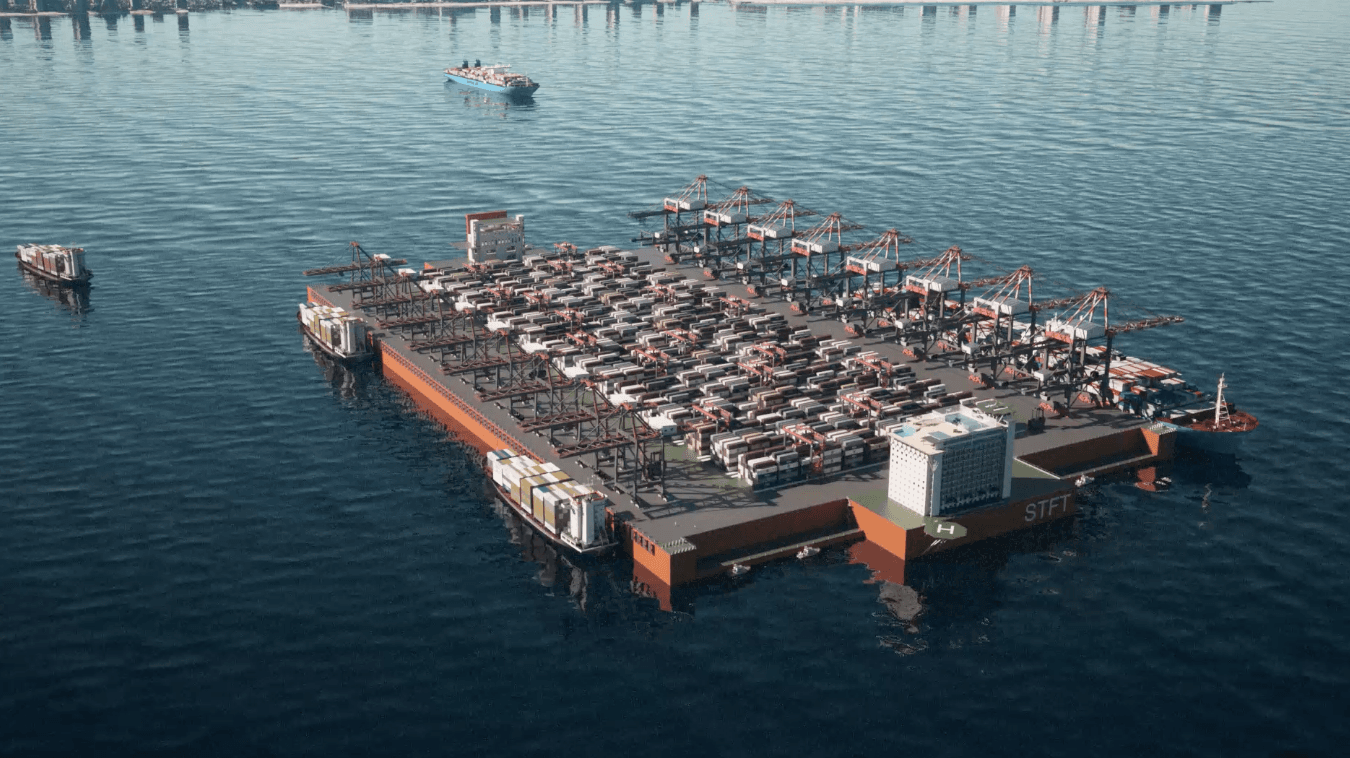
GLOBAL OPPORTUNITIES
Where the world's ports have run out of room
Ultra-large container ships need deep water that many harbours cannot offer without dredging. These are the places where a Sea Tech Floating Terminal could add that capacity, and how far each one has come.
Every location carries its status: identified opportunity, in dialogue, or project.
THE SHARED PROBLEM
Every location starts with the same constraint
The places on this page are far apart, but the problem is the same: the ships have outgrown the water in front of the port.
Container ships have grown faster than the channels and quays built to serve them, so many ports cannot take the largest ones at all.
Dredging a channel or reclaiming land means years of permits and construction, then maintenance dredging for as long as the depth is needed.
New trade lanes and shifting routes create demand in places where no deepwater berth exists yet.
LOCATIONS IN DEPTH
Vietnam and Panama
The two locations where our work has gone furthest. Each has its own page.
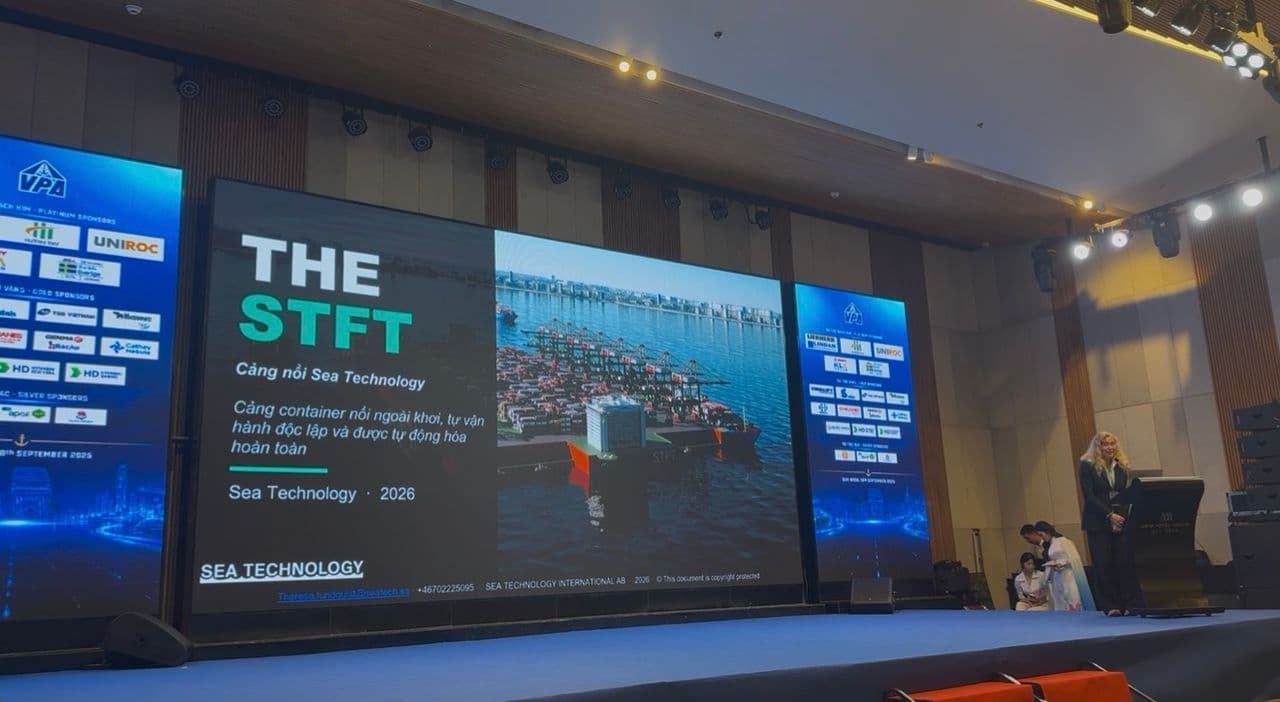
SOUTHEAST ASIA · Active market dialogue and opportunity development
Vietnam
Vietnam's ports handled 29.9 million TEU in 2024, up 21 per cent (Vietnam Maritime Administration). Its next deepwater hub, Can Gio, plans its first 4.8 million TEU by 2030. We visited with Business Sweden in September 2026.
Read about Vietnam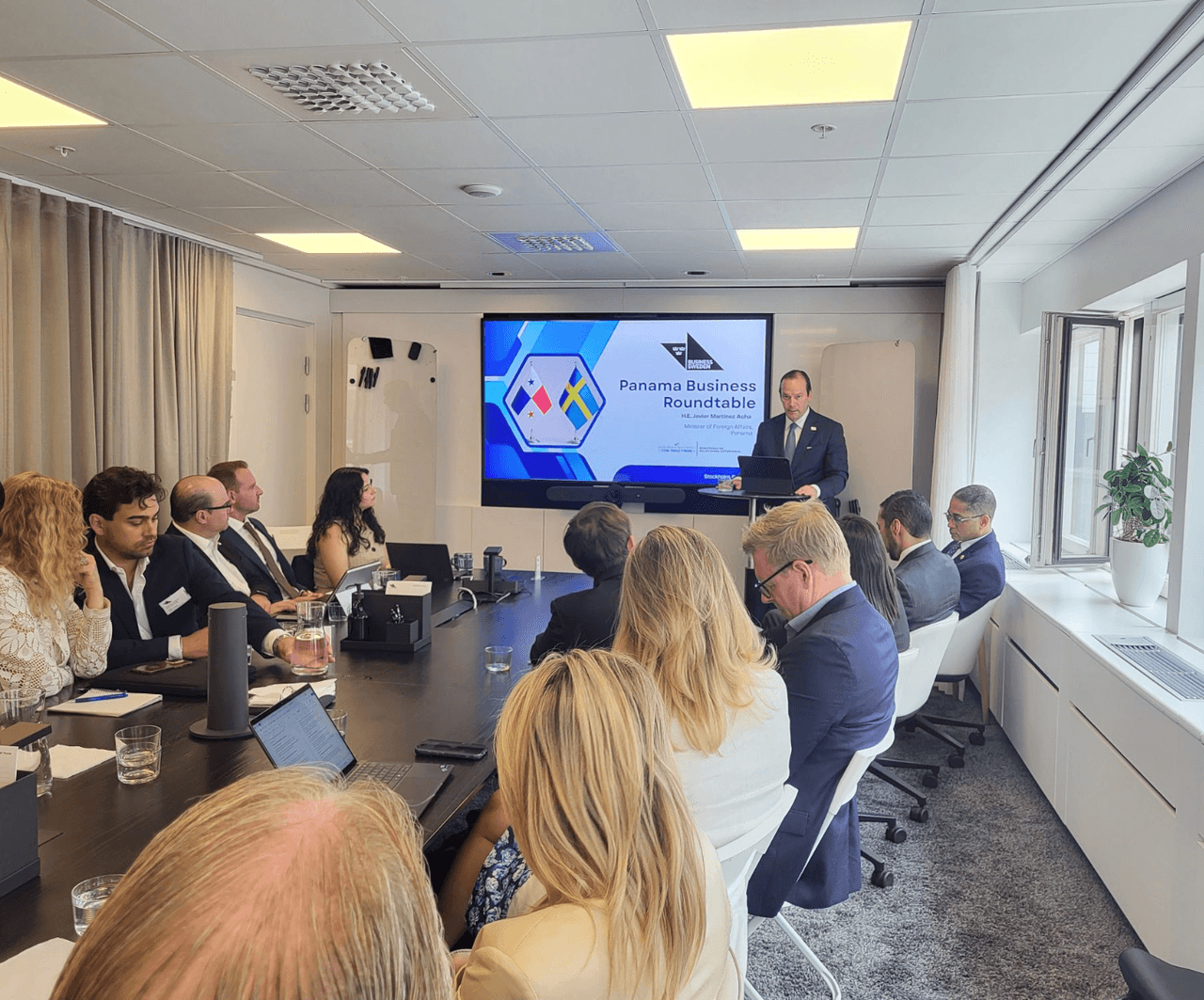
CENTRAL AMERICA · Active Dialogue & Opportunity Development
Panama
The largest container ships are too big for the Panama Canal's locks, so their cargo has to change ships to cross between oceans. Panama's ports handled 9.9 million TEU in 2025 (Panama Maritime Authority).
Read about PanamaMORE LOCATIONS
Five more places a floating terminal could fit
Short entries for now. Each gets its own page once there is more to say.
Gothenburg, Scandinavia's largest port, is deepening its fairway from 13.5 to 17.5 metres, with dredging from October 2026 (Port of Gothenburg, April 2026). A floating terminal adds deepwater berths without another dredge.
Ships entering the Venice lagoon are held to about 12 metres of draft, and the offshore container terminal proposed in 2015 was never built (MarineLink, 2015; Affaritaliani, 2024). A yard-built floating terminal offers the offshore berth.
The Río de la Plata is shallow: Buenos Aires' city terminals are limited to channels of about 10 metres (AJOT, August 2024), and the 2023 Magdalena channel tender drew no bidders. Floating capacity needs no new channel.
The US Army Corps of Engineers found that ships calling at Oakland increasingly exceed what its 50-foot channel was designed for (gCaptain, September 2026). A floating terminal adds capacity without new channel works.
Roberts Bank Terminal 2 was approved in April 2023 with 370 conditions and is expected to open in the mid-2030s (Baird Maritime, May 2025). Vancouver Island's deep, sheltered waterways could host capacity sooner.
Opening doors with Business Sweden
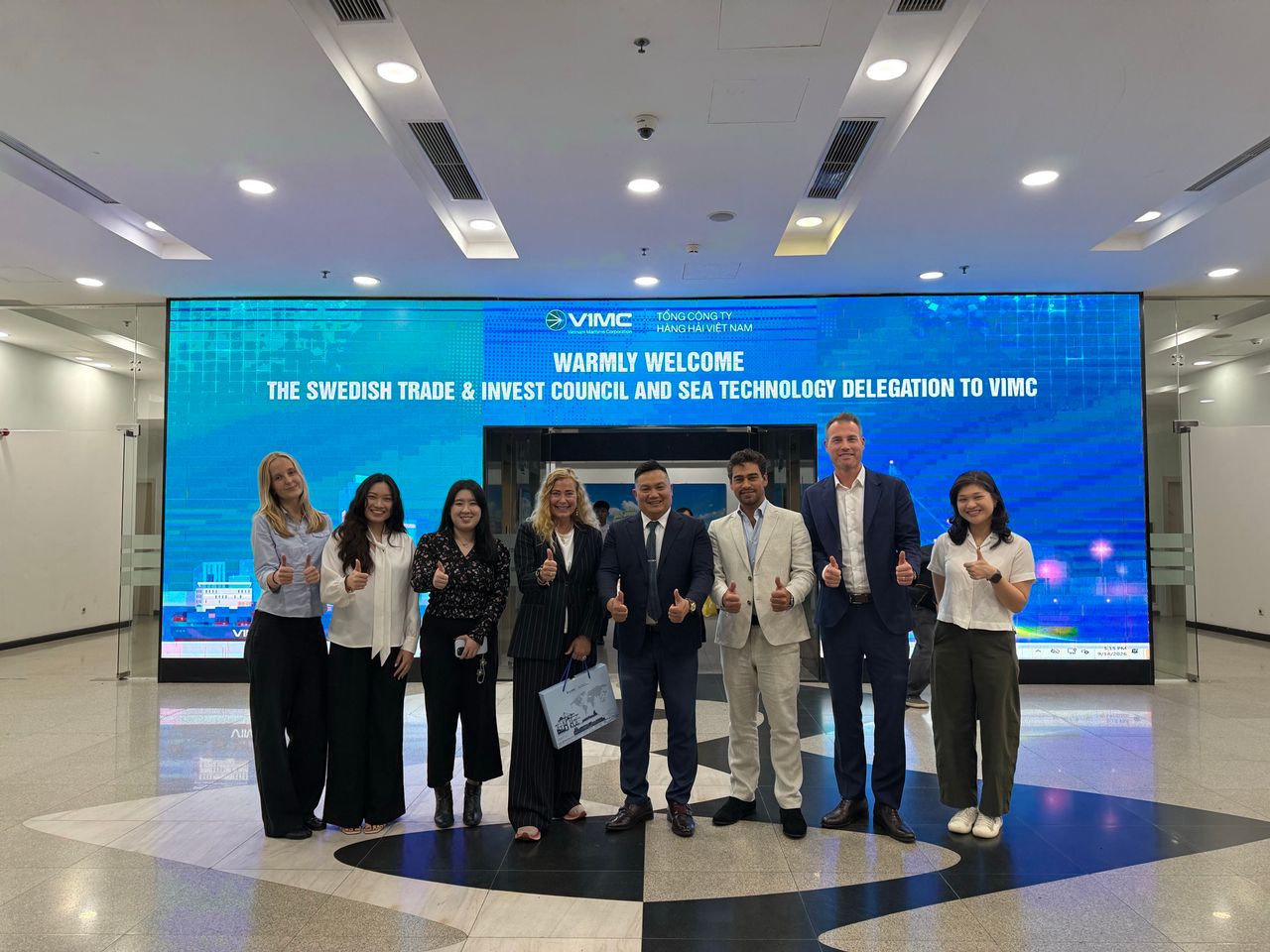
Sea Technology works with Business Sweden, the Swedish Trade & Invest Council, on delegations, meetings and introductions in markets including Vietnam. In September 2026 we travelled to Vietnam as part of a Business Sweden delegation.
NEXT STEP
Have a harbour that has run out of room?
We work with port authorities, terminal operators and government delegations on capacity planning.
First conversations are confidential.