
COMPARISON
Floating terminal vs dredging and land reclamation
There are three ways to give a port the depth and space ultra-large container ships need. Here is how they compare, including where dredging is still the better choice.
Written by the engineers behind the Sea Tech Floating Terminal.
Why Build More Land When You Can Float?
Traditional port expansion is costly, time-consuming and often environmentally disruptive. The STFT® introduces a smarter way forward.
Dredging deepens existing channels and berths to accommodate larger vessels, requiring ongoing maintenance and significant investment.
Land Reclamation creates additional port capacity by extending infrastructure into the sea, often involving extensive construction, environmental impact and long development timelines.
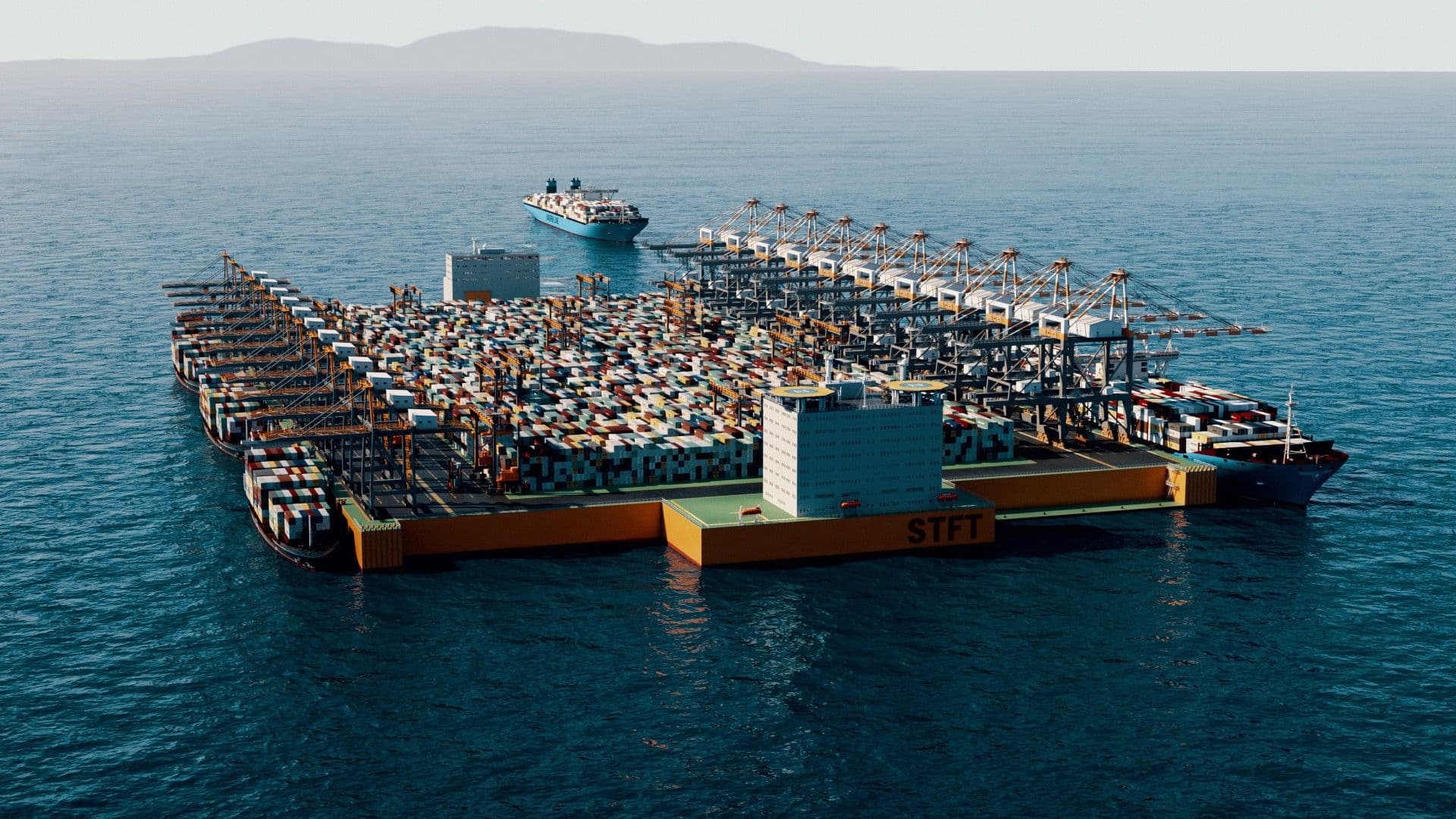
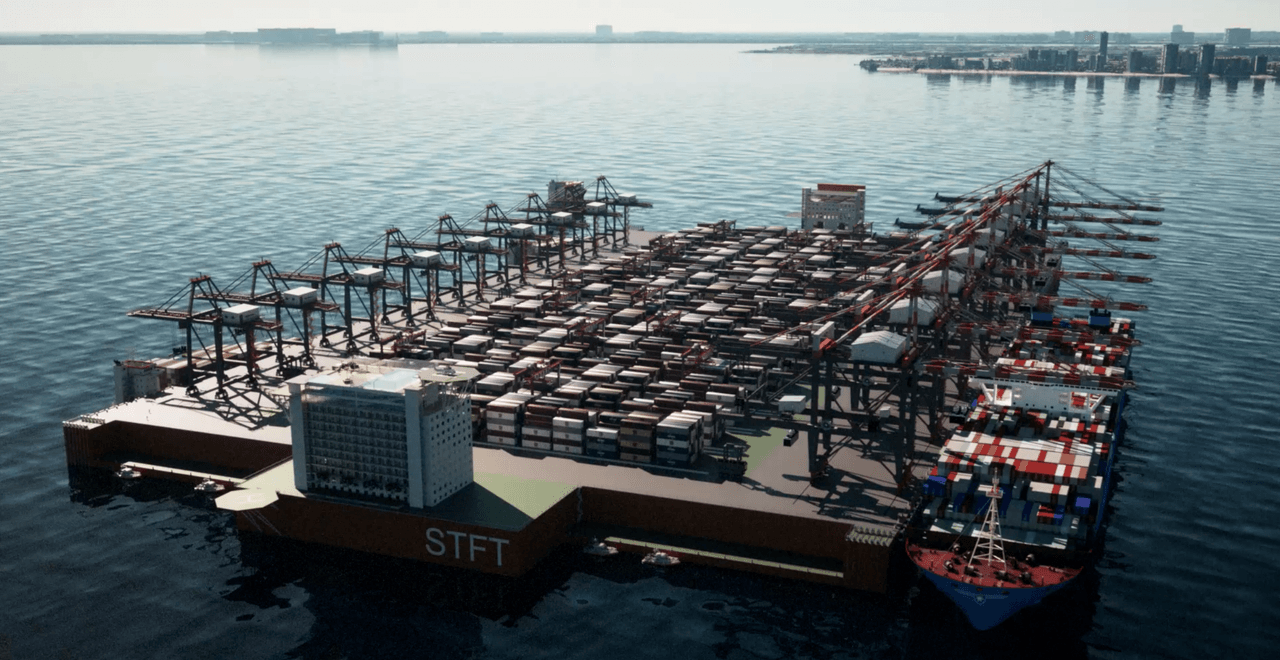
The STFT® – Floating Terminal offers a fundamentally different approach. Built in a shipyard and deployed in naturally deep waters, it delivers large-scale port capacity without extensive dredging or land reclamation.
Faster deployment. Reduced environmental impact. Scalable capacity.
The future of port infrastructure doesn't have to be built on land.
Let's Build the Future of Ports Together.
SIDE BY SIDE
How the three options compare
| Measure | Dredging | Land reclamation | Floating terminal |
|---|---|---|---|
| Time to new capacity | 15 to 20 years | 15 to 20 years | Under 5 years |
| Seabed | Excavated | Filled | Untouched |
| Shoreline | Unchanged | Extended | Unchanged |
| Upkeep of depth | Maintenance dredging | Depends on the site | None |
| Water depth | Limited by the channel | Limited by the fill | Up to 1,000 m |
| Where it is built | On site | On site | In a shipyard |
| If trade moves | Fixed | Fixed | Can be relocated |
| Track record | Decades of projects | Decades of projects | DNV Approval in Principle |
THE HONEST ANSWER
When each option is the right one
A floating terminal is not the answer for every port. These are the situations where each option wins.
You need a few more metres at a port with spare quay and yard capacity, the permits are in place, and the sediment is clean enough to move.
You need permanent land as well as berths, for logistics parks or industry next to the quay, and can wait fifteen years or more for it.
You need ultra-large ship capacity within five years, dredge permits are uncertain or refused, deep water lies close to the trade lane, or demand may move.
WHAT IS DIFFERENT
Three differences that decide the choice
The comparison usually comes down to time, risk to the capital, and the coastline.

Time
The modules are built in a shipyard in parallel with site preparation. Capacity arrives in under five years, not fifteen to twenty.
Capital that can move
Dredged channels and reclaimed land are sunk into one site. A floating terminal is a relocatable asset with a sixty-year design life, so the capital can follow the trade.

The coastline
Nothing is excavated or filled. Modelling published by RISE puts the CO₂ saving at 75 per cent over ten years, including the emissions from building the platform.
Floating terminal or dredging: common questions
What port authorities, investors and regulators ask when they compare the options.
It depends on the site, so we size each case. A floating terminal avoids the dredging and land reclamation spend, and keeps the capital in an asset that can be relocated rather than sunk into one harbour.
No. It is anchored in water up to 1,000 metres deep, so ships berth without a dredged channel and there is no maintenance dredging over its life.
Yes. It takes the largest ships offshore and feeder vessels carry their cargo into the existing port, so both keep working.
The design holds a DNV Approval in Principle under the OI Floating Infrastructure Installation notation, and MEYER Floating Solutions is the construction partner. Full class certification follows project by project as sites are selected. Dredging and reclamation have a longer track record.
A floating terminal leaves the seabed and shoreline untouched. RISE modelling puts the CO₂ reduction at 75 per cent over ten years. Read the impact case.
NEXT STEP
Compare the options for your port
Tell us the site and the ships you need to serve, and we will set a floating terminal against your dredging plan.
First conversations are confidential.