
BARGE CARRIER SYSTEMS
Float On, Float Off. 30,000 TEU per route.
A 370 to 410 metre mother ship carrying up to eight floating satellite barges. Engineered for Panama Canal transshipment and high-volume ULCV feeder routes.
We typically reply within 24 hours.
Transshipment without the dock
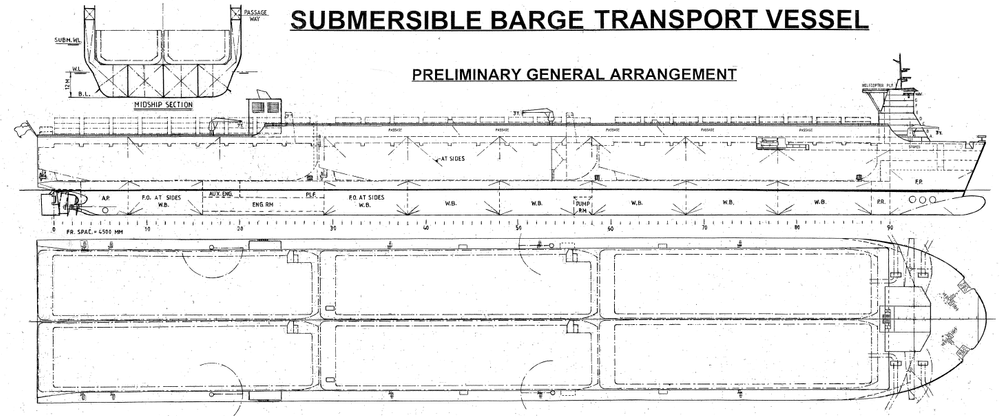
Conventional transshipment relies on dockside cranes, container yards, and dredged berths. Barge Carrier Systems replace the dock entirely. A mother ship submerges sections of its hull, allowing floating satellite barges to swim in or out under their own buoyancy.
The system is engineered in collaboration with SSPA, Sweden's hydrodynamic research institute. Operating speeds and stability are validated for open-ocean Panama Canal-class routes.
SYSTEM COMPONENTS
Modular by design
Four engineered subsystems make the Barge Carrier System work as one ocean-going transshipment hub.
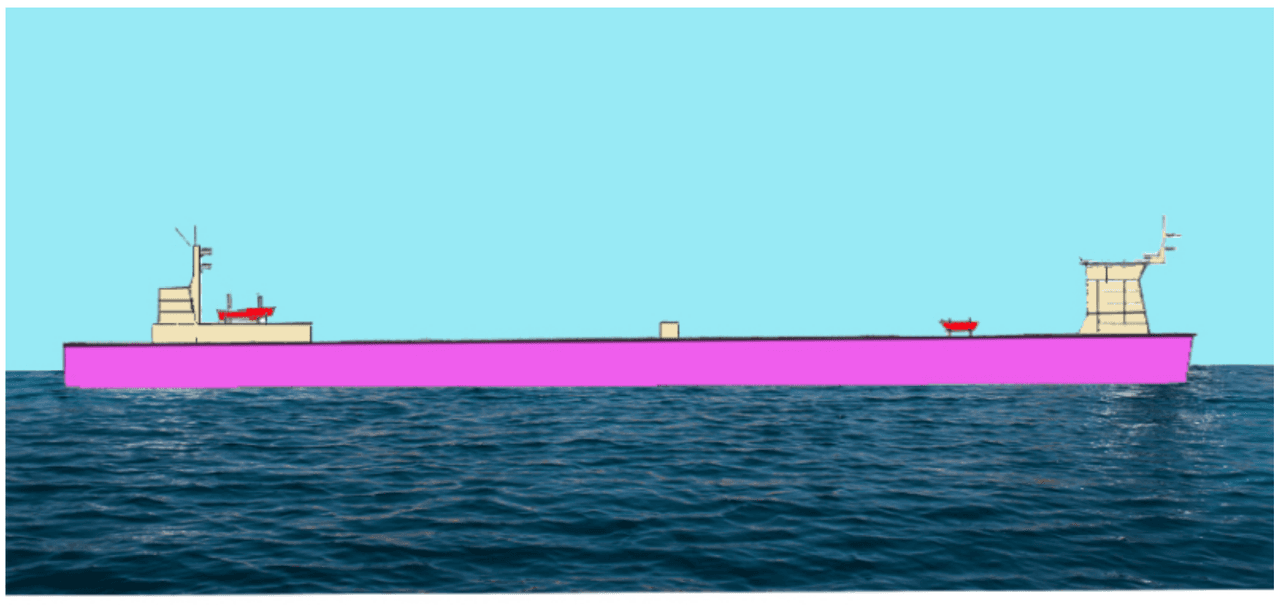
370 to 410 m length, configured for 4, 6, or 8 satellites depending on route and cargo profile.
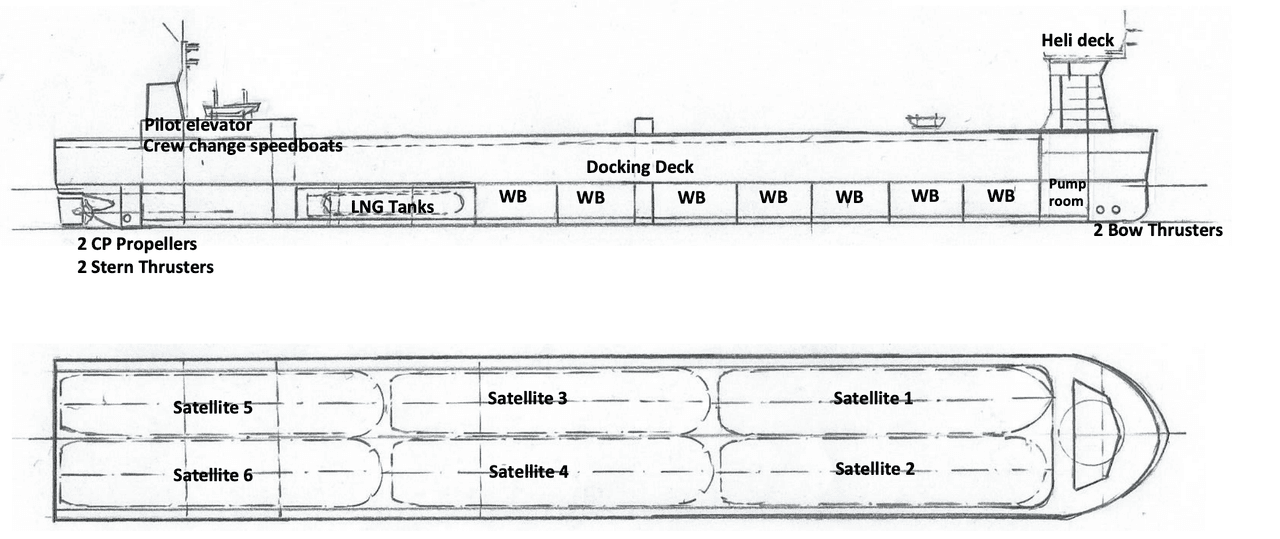
Floating modules accommodating containers, RoRo, or bulk. Loaded and unloaded by float on, float off under their own buoyancy.
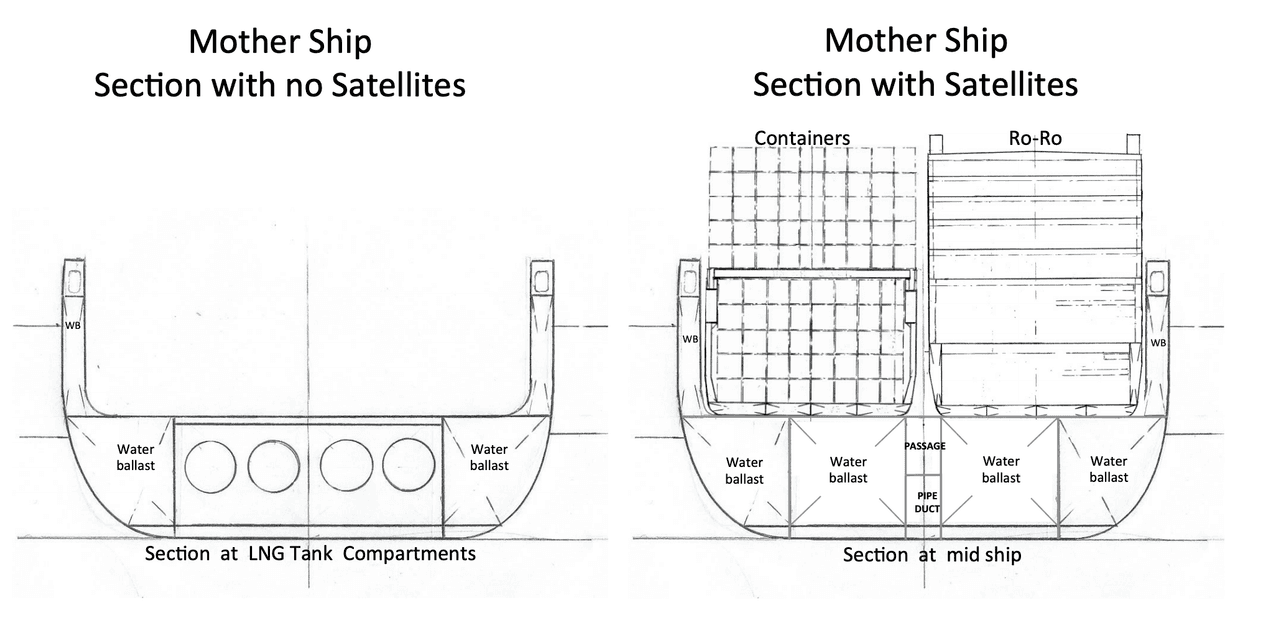
Forward and aft hull sections engineered for hydrodynamic efficiency at sustained ocean speeds.
Aft-mounted propulsion package engineered for long-haul transit and submersible operation during satellite loading.
CAPACITY
Scaled for Panama Canal-class routes
Mother ship plus eight satellite barges on a single route.
Configured for Panama Canal-class transit and open-ocean speeds.
Configurable as 4, 6, or 8 satellites depending on cargo profile.
Forward and aft sections optimised for speed and stability
The mother ship hull is engineered in distinct forward and aft sections. The bow is shaped for ocean transit at sustained speed. The aft section houses propulsion and the submersible bay for satellite loading.
Hull geometry is validated through SSPA tank testing, with operating speeds and stability confirmed for the open-ocean Panama Canal-class duty cycle the system was designed to run.
NEXT STEP
Discuss your transshipment route
We work with shipping lines and port authorities evaluating Panama Canal-class capacity.
First conversations are confidential.